Showing posts with label 1930s. Show all posts

Sunday, January 28, 2018

How to Wear Vintage & Stay Warm in Winter

We finally have snow and the temperatures are dropping fast over here. For many vintage lovers who live in warm and moderate climates autumn and winter are a wonderful time to bring out their cute little knits, half boots and trench coats. For those of us who live up north, the period between November and May is usually the time when we give up on all stylish pursuits and commit to ugly puffed jackets and rubber boots.

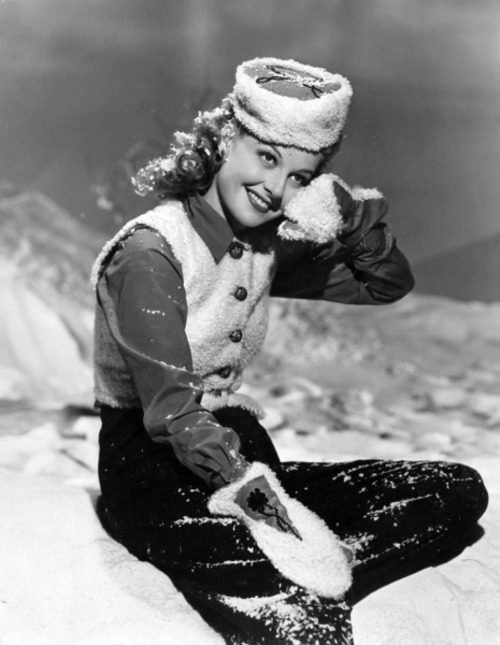
Ann Sheridan, Christmas 1940’s (Source)
But we don't have to! Here are my tips on how to dress vintage and stay warm all winter. 

1. Stick to natural fibers 
Step away from that polyester sweater and reach for woolen pullovers. Icelandic wool is particularly warm, but so is cashmere as well as alpaca.If you're crafty you can make your own vintage sweater using some great free patterns out there. But if you're not, you can often find sweaters in second hand shops that have a very vintage look. Just be sure to check the wool content on the label.  


Boiled wool skating outfit 1940's(Source)
Snow Queen sweater, mittens, hat knitting pattern, 1940's (Source)
Cotton or linen underthings and silk blouses (silk is surprisingly warm despite being so light) are also a great way to keep yourself nice and snug.     

2. Layer up 
Again, this may seem obvious, but layering is almost an art form. Start with thinner layers first and then build it up. A combination of a camisole, a blouse and a sweater or vest over it can keep you pretty warm. Make sure to put on a pair of long johns or thin tights under your trousers for extra warmth.  

Barbara Stanwyck wearing a gray gabardine ski head, Edith Head, Photoplay 1942 (Source)
Many people avoid skirts in the winter thinking that they cannot provide enough warmth, but, once again, it's all about layering. Add a warm petticoat to your outfit and you may be able to get away with wearing a skirt even when it's -15°C and lower. Look for skirts that are made of wool.

Woolen skirts are a great way to stay warm in winter (Source)
I have my own trick with tights. I tend to wear a pair of very thin tights and then add another pair of woolly tights. Alternatively, you can wear a pair of warm leggins over your tights. Don't forget warm socks since feet can get quite cold. 

3. Cover your head
You know how your mom has always told you to cover your head when it's cold? Well, that's a pretty good tip. You would be surprised by just how much more comfortable you will be if you would only put on a cute hat or a lovely scarf. 


Knit Yourself a 1940's Turban (Source)
(Source)
Vintage magazines are full of great hats, scarfs and turbans. In fact, if you are crafty, you can knit a cute turban. A scarf, if it's long enough, can cover both your head and neck, giving even more protection against the elements.

4. Expand your style inspiration
Whatever your favorite time period, look for new fashion icons who lived in colder climates. You would be surprised how many images from Denmark, Sweden and even Soviet Union you can find. These may be a little less glamorous, but they will give you some ideas on how to keep warm.
 
Estonian fashion Winter 1933. Taluperenainen 1932-33. Source
Finnish fashion, February 1942. Source
Fashions for the coming winter, Kotiliesi, October 1954. Source
Two girls by the sign "Swedish Tourist Association's hostel", Nordiska museet (Source)
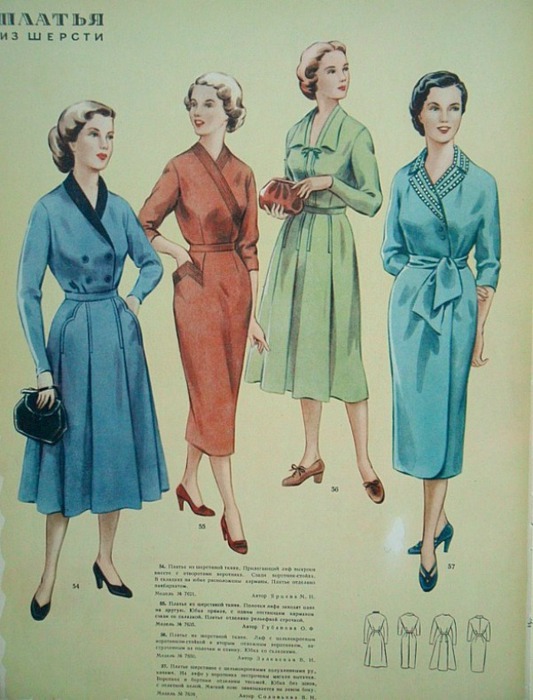
The Fashion Album, Autumn/Winter1955-1956, wool dresses, Soviet Union (Source)
For more inspiration, you can check out my vintage winter Pinterest board. 

Wednesday, October 4, 2017

Dracula's Daughter Review

"Thank you, I never drink... wine."
- Countess Marya Zaleska, Dracula's Daughter 

It's officially Halloween season! Which means I will be writing about all things ghoulish and frightful.  

There are some disagreements as to who is the most iconic mistress of darkness out there. Morticia Addams, Vampira, Elvira and Lily Munster are all fan favorites. But my heart belongs to Countess Marya Zaleska, Dracula's Daughter.

Source
Played by Gloria Holden in the 1936 Dracula's Daughter, she is equal parts mysterious, deadly and vulnerable. The film has it share of cheese and the human characters are somewhat on the bland side, but Countess Zaleska is mesmerizing.    
Source
Plot (with spoilers): Being a squeal, the film picks up from where Dracula (1931) left off. Countess Zaleska and her manservant Sandor steal Dracula's body and burn it. The Countess hopes that this would rid her of vampirism. But it does not work and she gives in to the blood lust. She meats Dr. Jeffrey Garth (Otto Kruger), a psychologist and one of Von Helsing's foremer pupils, and after a conversation with him becomes hopeful that he could help her overcome her urges through psychoanalysis. But when she encounters a beautiful model Lili (Nan Grey), she cannot resist and drinks her blood. Countess Zaleska gives up any hope of becoming human again and lures Dr. Garth to Transylvania. Her attempts to make him her undead companion fail and she is destroyed by her manservant. 

I think this film and the character are often, sadly, overlooked when people think of the Universal Studios monster line up. The film has very striking visuals and atmosphere. Its treatment of vampirism is also somewhat different from what we are used to today. The lust for blood is framed not as physiological need, but as a psychological affliction. There is no indication that Countess Zaleska needs to drink blood to survive. She drinks blood becasue she cannot help herself. And she expresses remorse and disgust at what she does. Consequently, the suggested cure is not a blood transfusion or any other antidote one could take, but rather psychoanalysis. Gloria Holden is superb as Countess Zaleska, equal parts poised, commanding and tragic. Her line delivery is always on point and she possess that magnetism that makes her dominate every scene.  

Source

Source
Source
Source

Source

Source


Source
Source

If you want to know more about the film and its production history, check out a wonderful three part article over at Women Write About Comics or see the film, which you can sometimes find on YouTube.   

Saturday, February 25, 2017

Film Review: Stage Door (1937)


I've been sick for the better part of the week. And when I'm sick, I like to watch a lot of movies. It was then very fortunate that I came across the delightful 1937 Stage Door on BBC iPlayer. Starring Katharine Hepburn and Ginger Rogers, the film tells the story of trials and successes of aspiring actresses who all live in a boarding house in New York City. It has it all - sparkling humor, biting wit, Ginger Rogers dancing, the glamour of the stage, the tragedy and poverty backstage, and, of course, the delectable late 1930s fashions.

Plot: Hepburn plays Terry Randall, a rich girl, who wants to see if she has what it takes to become an actress. She is determined, pragmatic and maybe just a little too entitled. All this doesn't sit too well with the other aspiring actresses at the Footlights Club boardinghouse where Terry lodges. She and her new roommate Jean Maitland (Rogers) develop an amusing love/hate relationship that leads to a lot of comedic moments. The other inhabitants of the boardinghouse are the shrewd Linda Shaw (Gail Patrick), the fragile and tragic Kay Hamilton (Andrea Leeds), and the endearingly goofy Judy Canfield (Lucille Ball). Terry gets a part in a new play, but acting turns out to be harder than she had thought. It takes a real tragedy to make her into an actress.


There is a lot of humor in the film, but there's also a lingering sense of doom over the young women in the house. Like All About Eve, one of my all-time favorite films, Stage Door may be glitzy and glamorous, but underneath all this there are some hard questions - will Terry's success last or will she be forgotten by the next season? Are the other girls going to find their big break or will they have to give up and marry? Will they live out the rest of their lives in obscurity and relative poverty?


One of the things I especially love about this film is that it centers on women, their lives and their goals. Unlike other movies about women that are really about men (yes, I'm looking at you The Women 1939), Stage Door does not try to hammer in the point that a woman's best role is that of wife and mother. In fact, marriage seems to be treated as failure and near tragedy, while men are obstacles, rather than heroic saviors. One of the more prominent male parts in the film is the smarmy producer Anthony Powell (Adolphe Menjou). He is as close as this film gets to a villain. Even though he is rather pompous and silly, his predatory behavior shows clearly what the women have to put up with to succeed in the theatrical world.  


Hepburn is delightful as Terry. She bring the dry wit and sophistication that this part really needs. Terry does come off as rather entitled and too posh at times. The scenes where she quarrels with the director and the writer of the play she had been cast in are truly cringe-worthy. But she learns her lesson in the end.


Rogers as Jean is fresh, bright and sparkling (sometimes literally). Her comedic timing is impeccable and she delivers some of the funniest lines in the film. But she also has her moments of gravitas as she contemplates her future and the future of the other girls in the boardinghouse.

Miss Luther (Constance Collier) is one of my favorite characters. She is played for laughs as an aging actress who is trying to become an acting coach and insists that the girls need theatrical training. The audience is meant to laugh at her, but she's not wrong. Terry's main problem is that she assumes that acting is somehow innate. The film makes a broader point that the tragedy of show business is that it's more about being liked by powerful men like Anthony Powell rather than having talent. But I'm still with Miss Luther on this one, those girls should at least know a little bit of Shakespeare.

Needless to say, the outfits in the film are wonderful. The costume designer was Muriel King.
The Battle of the Mink Coats. Jean and Linda are deliciously antagonistic.

I just love this polka dot romper. I really need to make this for myself.

This hat gets a lot of hate from the girls at the Footlights Club boardinghouse. But I think the outfit just screams chic Doctor Zhivago.

Oh, that hat! That purse! That coat! That...dress?  Oh, Jean, no!

A lot of the outfits in the film are more stylish day-to-day stuff rather than glamorous gowns. I love Jean's blouse and high waisted trousers combo, but Linda's dress with the half-turban and the sash are delightful in their pretentious sophistication.  

Judy's suit is really fun, but Jean, once again, wins me over with the blouse and high waisted skirt with suspenders. Also, ukulele.   

I'm just really partial to pajamas. Maybe it's becasue I live in a cold climate and therefore find pretty, impractical PJs to be the pinnacle of fashion. I really love Terry's dress, too.    

Here's a better picture of Terry's lovely dress. It's very no-nonsense, just like her, with just a touch of see-through chiffon to show that she has a soft, vulnerable side, too.

In the end, Stage Door is a wonderful movie that you can watch again and again. The acting is great and the dialogue feels authentic and honest. And it's all about girls doing it on their own.
Related Posts Plugin for WordPress, Blogger...